 Denys Mitchell
Key Takeaways
- Seven codes cover almost everything an Asko condenser or heat-pump dryer reports, so start from the code rather than the symptom.
- E2, E4 and F3 all describe restricted airflow from different angles — filters and the condenser block come before any part.
- E5 is condensate drainage, and it stands out because the cycle stops without the machine being especially hot.
- E3 makes the dryer claim it is finished while clothes are damp, and fabric softener film on the sensor bars is a common cause.
- Cycles that have been getting gradually longer for weeks are an early warning, usually of drainage or a clogged condenser.
The Bottom Line
Read the code first and sort it into airflow, water, or sensor. Airflow and water faults are almost always yours to clear in fifteen minutes; fan motor, door switch, and sensors that survive cleaning need a technician.
Asko dryer troubleshooting is easier than it looks, because the machine narrows the problem down for you before you open anything. Seven fault codes cover almost everything these condenser and heat-pump dryers report, and five of the seven come back to one of two things: airflow, or water that is not draining. Start with the code, not with the symptom.
| Code | What it means | What you notice | Where to look first |
|---|---|---|---|
| E1 | Temperature sensor fault | Cycles end early or run long | Sensor circuit — technician |
| E2 | Overheating trip | Machine hot, cycle aborts | Lint filters and condenser airflow |
| E3 | Moisture sensor fault | Clothes damp, dryer says done | Sensor bars and softener film |
| E4 | Exhaust temperature fault | Long cycles, uneven drying | Restricted airflow path |
| E5 | Condensate drain fault | Cycle stops, machine not hot | Water tank and drain hose |
| F3 | Fan motor fault | Drum turns, little air moves | Blower motor — technician |
| F5 | Door switch fault | Will not start or stops midway | Latch and switch — technician |
Airflow Explains More Than Half the List
E2, E4 and F3 are three different codes describing the same physical situation from three angles: not enough air is moving through the machine. On a condenser or heat-pump dryer that air is recirculated rather than vented outside, so every restriction in the loop shows up as heat that cannot leave and moisture that will not condense.
E2 is the overheating trip — the machine reached a temperature it is not willing to hold and shut the cycle down. That is a protective action, not a breakdown. Before anyone quotes you for a thermostat, the airflow path deserves a proper look.
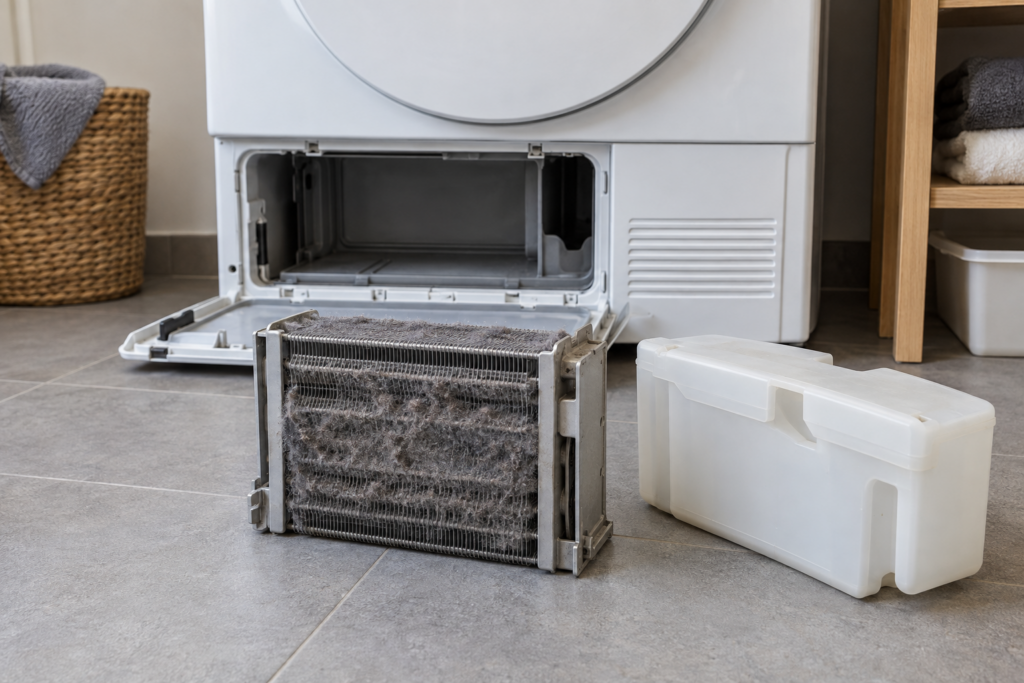
The Parts of the Loop You Can Clean
Almost all of this is homeowner work, needs no tools, and takes about fifteen minutes with the machine unplugged.
- The door filter. Clear it after every load, not every few loads. A film you can feel with a fingertip is already restricting flow.
- The secondary filter. Most models have a second finer filter below or behind the first. It is the one people forget for years.
- The condenser block. Behind the flap in the plinth. Pull it out, rinse the fins under a tap until the water runs clear, and let it drain before refitting. Heat-pump models often have a fixed evaporator instead, cleaned with a soft brush rather than water — check your manual before pouring anything into it.
- The seal and housing. Wipe out the lint that collects around the condenser bay itself, not just on the block.
- The clearance behind the machine. A dryer pressed flat against a wall in a closed laundry closet is breathing its own warm air.
If E2 or E4 returns after all of that, the fault has moved past maintenance and into the sensor or blower territory, which is where a technician earns the visit.
The Water Side: E5
A condenser dryer pulls water out of your laundry and has to put it somewhere — either into a removable tank or out through a drain hose. E5 is a condensate drain fault, and it has a signature that separates it cleanly from the heat codes: the cycle stops partway and the machine is not especially hot.
Start with the tank, because a full tank is the most common cause and the fastest to rule out. On plumbed models, check the small-diameter drain hose for a kink or a blockage, and look for water pooling in the base tray under the machine. One early warning is worth knowing: cycles that have been getting gradually longer over several weeks often precede E5 by a month or more, because failing condensate drainage drags the condenser's efficiency down before it trips anything.
When the Dryer Lies About Being Done
E3, the moisture sensor fault, produces the most frustrating complaint in the list: the machine says the cycle finished and the clothes are still damp. Asko measures dryness with metal sensor bars inside the drum that read the conductivity of the laundry touching them. Fabric softener and dryer sheets leave an invisible insulating film on those bars, and a coated sensor reports dry laundry that is nothing of the sort.
Wiping the bars with a little white vinegar on a cloth is a legitimate first step and costs nothing. If the code survives that, the sensor circuit itself is involved. E1 belongs in the same family — a temperature sensor that has drifted makes the control board end cycles early or run them far too long, and no amount of cleaning affects it.
Keeping the Codes Away
Every code above except F5 responds to routine. The dryers that never post a fault are the ones whose owners do four small things consistently.
- Clear the door filter every load. This one habit prevents more E2 and E4 faults than everything else combined.
- Rinse the condenser monthly. Quarterly if the machine is lightly used, monthly in a busy household.
- Empty the tank when prompted, not when it errors. The prompt exists so E5 never has to.
- Wipe the sensor bars every few months. Especially if anyone in the house uses fabric softener.
Our Asko dryer maintenance guide sets out the full schedule, and it is worth pairing with this list rather than reading either one alone.
What Needs a Technician
F3, the fan motor fault, and F5, the door switch fault, are not maintenance items. Neither is a sensor that stays faulty after cleaning, or a heat-pump circuit that has stopped recovering heat. All of them sit behind the cabinet alongside mains wiring.
Condensate drain work starts from $150 on this site, and other repairs vary with the assembly involved. The final price is confirmed after the on-site diagnosis, and you get a written estimate before any work begins. Our Asko dryer repair service covers the airflow path, the sensors, and the condensate system in one visit.
Note the code, whether the machine felt hot, and whether the tank was full, then book a visit or send us the details. Those three answers usually decide the repair before anyone arrives.