 Denys Mitchell
Key Takeaways
- E08 means the oven thermal protection has activated because the cavity or the electronics exceeded safe temperature limits.
- Blocked ventilation, a runaway thermostat or sensor and a failed cooling fan are the three listed causes.
- Let the oven cool for 60 to 90 minutes before a breaker reset, and do not keep using it if E08 keeps returning.
- Blocked ventilation is a free fix; a sensor or thermostat repair is usually worth doing on an oven under about 12 years old.
- A control board and another major part failing together on an older oven is where replacement deserves serious thought.
The Bottom Line
Check clearances and ventilation, cool the oven fully and run the low-temperature test. Repair a sound oven; weigh replacing an old one with paired faults.
An oven that shuts itself off mid-roast with E08 on the display has not broken. It has protected itself. The thermal cut-out is a safety device, and it trips when the cavity or the electronics around it climb above a safe limit. What decides whether the oven is worth keeping is the reason it got that hot, and that reason ranges from a stack of baking trays on top of the oven, which costs nothing, to a thermostat that has stopped reading correctly, which is a repair, to an old oven with several things wrong at once, which is a replacement conversation. This guide sorts them out. It sits under our Asko oven repair or replace guide, which sets the age and cost framework used here.
| Situation | Lean toward | Reason |
|---|---|---|
| E08 in a newly installed or renovated kitchen | Fix the ventilation | Tight cabinetry without ventilation cut-outs is a known cause |
| E08 with items stored on top of the oven | Clear the top, no repair | Blocked airflow traps heat |
| E08 returns within a cycle or two after cooling | Repair, sensor or thermostat first | The temperature control is running away |
| Oven overshoots the set temperature on a test | Repair, and stop using it meanwhile | The sensor is reading wrong |
| E08 plus a second major fault on an old oven | Weigh replacing | The parent guide treats paired failures on an older unit as a trigger |
Asko Oven Thermal Cut-Out Repair or Replace: A Plain Answer
Fix the installation when ventilation is the cause, repair the oven when a sensor, thermostat or fan has failed on a unit under about 12 years old, and consider replacing it only when E08 arrives alongside other major faults on an older oven. That order matters, because the cheapest explanation is also the most common one, and it is the one most often skipped by owners who go straight to pricing a new oven.
What Does E08 Mean on an Asko Oven?
It means the oven's thermal protection has activated because the cavity or the electronics around it have exceeded safe temperature limits. This site's E08 code page rates it a high-severity fault and says the oven should not be used again until the root cause has been identified, since an overheating condition can be dangerous in itself.
The symptoms are consistent. The oven shuts down mid-cook at high temperatures, all the heating stops and E08 shows, the outside panels or the cabinets nearby feel unusually hot, and sometimes there is a strong burning smell from scorched residue or insulation.
Can You Reset E08 Safely?
Yes, but only after the oven has cooled completely, and only as a test. The thermal cut-out can be reset by switching the breaker off and on once the oven is cold, and the page asks for at least 60 to 90 minutes of full cooling with the door closed, because resetting while it is hot may trip it again instantly. If the cause has not been fixed, the cut-out trips again, and each trip is a small stress on the oven.
What to Check Before Paying for a Repair
Three checks cost nothing and settle the cheapest causes. They are also the order a technician would take you through on the phone.
- Let the oven cool fully, keep the room ventilated and keep children and pets away from the hot exterior while it does.
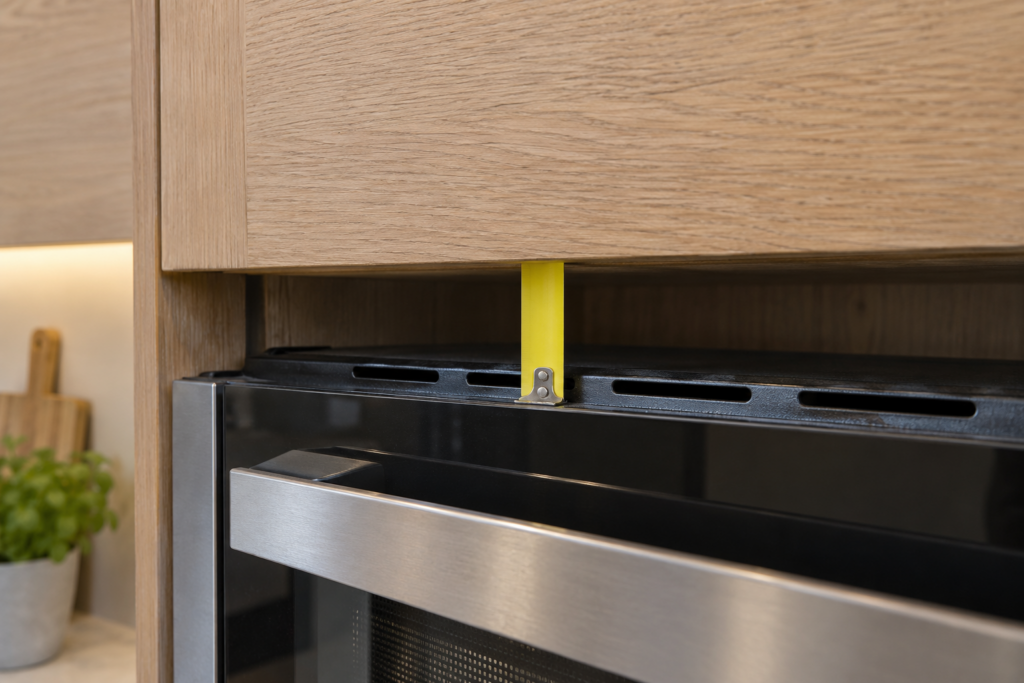
- Check the installation clearances against the Asko installation guide for your model, which on the code page are typically about 50 millimeters, or two inches, above and behind. Remove anything stored on top of the oven and make sure the vents are clear.
- Run a low-temperature test. After a breaker reset, set the oven to 300 degrees Fahrenheit and watch it for 20 minutes, ideally with an independent oven thermometer inside.
If the oven climbs well past the set temperature, or trips E08 again quickly, a runaway thermostat or sensor is likely, and the page says not to continue. An overshoot of more than about 54 degrees Fahrenheit on that test is the point at which to stop and call.
Which Cause Changes the Repair or Replace Answer?
Three causes are listed on the code page, and each leads to a different answer.
- Blocked ventilation — no part has failed. Giving the oven clearance, or adding ventilation cut-outs where a renovation has boxed it in, is the cure. This is the one cause where replacing the oven would be absurd.
- Thermostat or sensor runaway — a sensor that reads low makes the control board run the elements continuously until the cut-out trips. It needs a technician, and on an oven under about twelve years old it is a repair.
- A failed cooling fan — a dead fan lets heat build up around the control electronics, which trips the secondary protection. The related E04 page covers the fan itself.
It also helps to know that the cause may be in the kitchen and not in the oven. A recessed installation in a tight cabinet without proper ventilation cut-outs is described on the code page as a common cause in newly installed or recently renovated kitchens, so an oven that never gave trouble before the remodel deserves suspicion of the installation first.
Whichever applies, an E08 that recurs and has damaged the cabinetry or discolored the surrounding surfaces needs a technician before anything else, because repeated overheating can harm more than the oven.
How Age and Condition Settle It
The parent guide puts the decision in five steps, and they apply here as they would to any oven fault.
- Under 12 years old: repair is the clear default, given a design life of 15 to 20 years.
- A single component at fault: a sensor, thermostat or fan is an affordable repair and worth doing.
- A repair that costs more than 35 percent of a new oven: weigh it carefully, especially past 13 years.
- A control board and another major part failing together: replacement deserves serious thought.
- A kitchen renovation planned soon: absorbing a repair now rather than buying twice can make sense.
- Repeated repairs in a short period: for ovens, which have few wear parts, several faults close together are a stronger sign of decline than they would be on a washer.
An E08 repair starts from $180 on this site, and the final price is confirmed after an on-site diagnosis, with a written estimate before work begins. Set that estimate against the age of the oven and the cost of a new one, using the framework above.
Getting the Oven Looked At
Note when E08 appears, what the oven was doing, how it is installed and what the temperature test showed. Our E08 code page lists the safe checks in order, and the oven repair service tests the sensor, the thermostat and the cooling fan before any part is ordered. For the other side of the decision, our oven worth-repairing guide covers what is usually worth fixing, and the oven safety guide covers keeping the kitchen safe in the meantime. Book a visit or send us the model and what the oven did before E08.