 Denys Mitchell
Key Takeaways
- E5 means the control board is not getting a speed signal from the drum motor; the cause may be brushes, the tachometer or the motor control module.
- Most E5 causes are wear parts and sensors, so the motor is usually worth fixing; the inverter board on newer W6000 models is the larger repair.
- Unplug the machine and turn the drum by hand: a stiff or locked drum may be a jam, and underwires are a frequent cause.
- Stop using the washer with E5: a motor that cannot turn can overheat, and a burning smell means disconnect the power.
- The decision tips toward replacing when the motor is one of several worn parts on an older machine.
The Bottom Line
Turn the drum by hand and stop using the washer. If it turns freely and E5 returns, a motor repair is usually worth it on a younger machine; weigh replacement when the washer is old or has other faults.
The drum motor is the part of an Asko washer that decides whether a repair is a modest bill or a serious one. It is also the part behind E5, the code that stops the machine because the control board is not getting a speed signal back from the drum. The right answer depends on which of three things has failed, because they are priced very differently, and on how old the machine is. This guide is about the motor circuit only; for the age-based view of the whole machine, start with our guide to whether it is worth repairing an Asko washer.
| What has failed | How it shows | Usually worth fixing? |
|---|---|---|
| Something jammed in the drum | Drum stiff or locked by hand | Yes, and it may cost nothing |
| Worn carbon brushes | Buzzing, no rotation, burning smell | Yes, a wear part |
| Tachometer (speed sensor) | Zero speed signal, drum may turn freely | Yes, a contained part |
| Motor control module (inverter board) | Motor will not run, newer W6000 models | Weigh against the machine's age |
| Several faults together | Motor plus drum or board problems | Compare with replacing |
What Does E5 Mean on an Asko Washer?
E5 means the control board has detected an abnormal or absent speed signal from the drum motor, and it shuts the machine down to protect it. The E5 page rates it high severity and describes it on Asko washing machines, with the inverter-board cause tied to the newer W6000 series. The page's symptom list is the quickest way to match your machine:
- Drum slow or still. After the water fills, the drum does not tumble or moves only in short jerky movements.
- The cycle aborts early. The machine fills, starts to wash and halts within minutes.
- A loud, intermittent buzz. It comes from beneath the drum and is distinct from the quieter pump hum.
- A hot carbon smell. It may appear near the machine shortly before or after the code.
The page lists three causes: worn or broken carbon brushes, a faulty tachometer coil or its wiring, and a failed motor control module on newer inverter-driven models. Nothing about E5 is a reset-and-forget code, because the page says that a reset only clears it temporarily and it returns on the next cycle if the cause remains.
Is an Asko Washer Motor Worth Fixing?
Usually, because the common causes are wear parts and sensors, not the motor itself. Brushes wear out over time on motors that use them, and the page notes that new brush sets are inexpensive and widely available. A tachometer coil is a small part on the motor. Only the inverter board on newer models is a larger repair, and even that is priced at a level the page treats as reasonable for a premium machine.
A typical E5 repair starts from $160 on this site, with the final price confirmed after diagnosis on site and a written estimate before any work begins. What turns the answer into a closer call is not the motor but the machine around it: an old washer with a worn drum bearing or other faults is a different decision from a young one with a single failed sensor.
What Can You Check Without Tools?
Whether the drum turns freely. The page's first safe check is to unplug the machine, open the door and try to rotate the drum by hand. It should turn with moderate resistance from the belt or bearings. If it feels locked or extremely stiff, something may be jammed between the drum and the tub, and the page says not to force it.
- Unplug first. Never put a hand in the drum area of a machine that is connected.
- Turn the drum by hand. A free turn rules out a jam and points at the electrical side.
- Look at the gap by the door seal. The page names bra underwires as a frequent cause of drum seizure and E5 faults on Asko machines.
- Do not force a stuck drum. A jammed drum is a technician's job once you have looked.
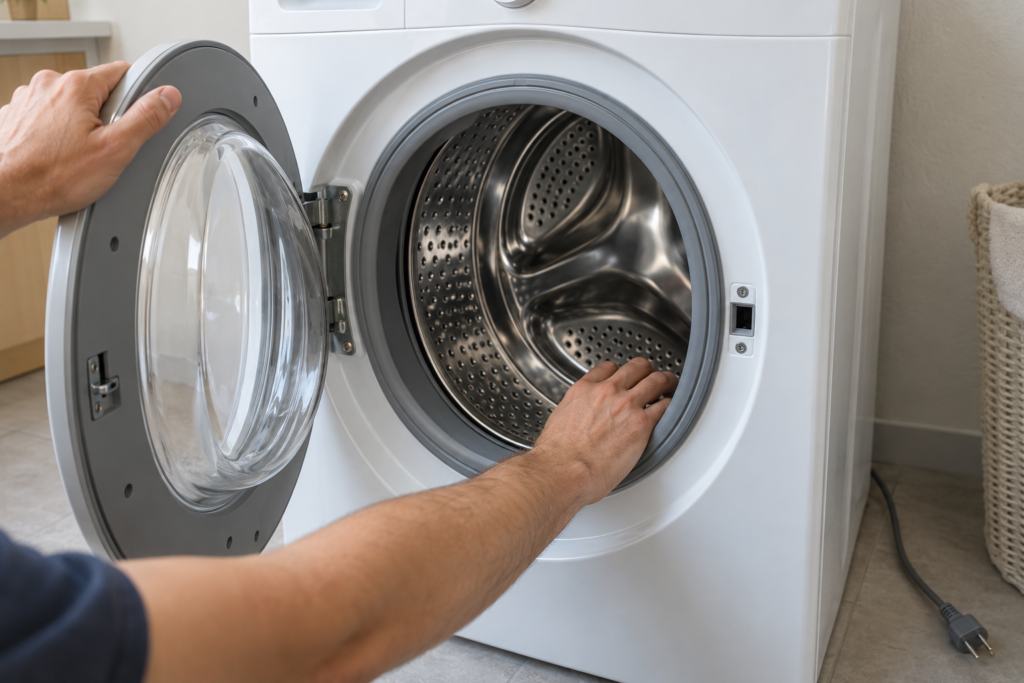
The page also describes inspecting the carbon brushes through the back panel for owners who are comfortable with basic disassembly. We would leave that to a technician: it means removing the rear panel of a machine that holds water and carries mains voltage, and a visit costs less than a mistake.
Why Should You Stop Running the Washer With E5?
Because a motor that cannot turn can overheat. The page says a motor fault prevents the drum from spinning, leaves clothes sitting in soapy water and carries a risk of motor overheating, so the machine should not be run until the fault is diagnosed. A burning smell is a reason to disconnect the power at once, and a drum that is completely locked and cannot be turned by hand is the other signal to stop.
- A burning or acrid smell. Hot carbon or burnt insulation near the machine during spin.
- A locked drum. It cannot be turned by hand even with the machine unplugged.
- A loud, intermittent buzz. The motor receives power but cannot turn freely.
Wet laundry can be rescued by hand-wringing or by draining through the pump if the machine allows it; the point is to stop asking the motor to start a cycle it cannot complete.
When the Motor Decision Tips Toward Replacing the Washer
When the motor is one of several worn parts, or when the washer has reached the age where the next failure is already likely. The motor is rarely the reason on its own. Our guide on Asko washer repair or replace sets out how age and repair history change the answer, and the broader cost picture is in Asko washer repair costs.
Ask the technician three questions before agreeing. Which of the three causes was found, whether the machine's drum bearings and belt were checked while the motor was accessible, and what the estimate covers. A motor repair on a washer whose bearing is about to fail is a repair you will pay for twice.
What to Tell the Technician About E5
Describe the sound and the smell, because they point at different causes:
- Buzzing with no rotation. Brushes or a jam are the likely suspects.
- A silent drum with the display on. The speed signal or the motor module is more likely.
- A burning smell. The motor may already be damaged, so say so.
If the machine is a W6000, say so, since that series can have the inverter board as the failed part.
If the drum turns freely and E5 still appears, the problem is electrical, and a technician will test the tachometer coil and the module. Our Asko washer will not spin guide covers the wider symptom. The washer repair service covers the motor circuit; schedule a visit or contact us with the code, the model and what you heard.