 Denys Mitchell
Key Takeaways
- An Asko dishwasher door latch is worth fixing at almost any age: it is a small part, and the machine is unusable without it.
- F8 means the control board has not received a door-closed signal, and the machine will not run while it is active.
- Reloading the baskets so nothing presses on the door, checking the strike and a power reset are the free checks.
- If F8 returns on an empty machine, the latch or the microswitch needs repair.
- A door that sags or will not stay shut also needs the hinge checked.
The Bottom Line
Reload the baskets, check the strike and reset; if F8 returns on an empty machine, repair the latch or switch, which is almost always worth it. The price is confirmed after diagnosis, with a written estimate before work begins.
A dishwasher that will not start because it thinks its door is open is a frustrating fault, because everything else about the machine still works. The part that decides is small: a latch hook, its strike and a microswitch that tells the control board the door is shut. This guide takes that one part and asks whether it is worth repairing. It sits under the wider question in our guide on whether an Asko dishwasher is worth repairing, and the code behind it is F8.
| Situation | Worth fixing? | Why |
|---|---|---|
| F8 clears when the baskets are reloaded | Nothing to repair | An item was pressing on the door |
| Latch hook or strike cracked | Yes | A small part and a short visit |
| Door appears closed, F8 stays | Yes | The microswitch has most likely failed |
| Door drops at one side | Yes, with the hinge checked | Hinge wear is the underlying cause |
| Machine very old with other faults | Weigh the total | Add the estimates together |
Is an Asko Dishwasher Door Latch Worth Fixing?
Yes, at almost any age. The F8 page puts a typical repair from $130 and a visit of 30 to 60 minutes, and the repair cost guide on this site says that door components, like drain pumps and inlet valves, are worth replacing at almost any age because the rest of an Asko is generally in better condition than the same-aged mid-market machine. A latch problem also leaves the machine unusable, so the value of the repair is high.
The only case where it makes you hesitate is a machine that has several other faults at once. Then the latch is one line in a longer estimate, and the total is what you weigh against a new dishwasher.
What Does F8 Mean on an Asko Dishwasher?
That the control board has not received a door-closed signal from the door lock switch. The code page calls it a safety interlock: the cycle cannot start or continue until the door is confirmed closed, so the machine will not run while F8 is active. Pressing Start simply shows F8 again.
It is rated medium severity and described as sometimes fixable at home, and the difference between the cheap and the costly version lies in which of three parts is at fault.
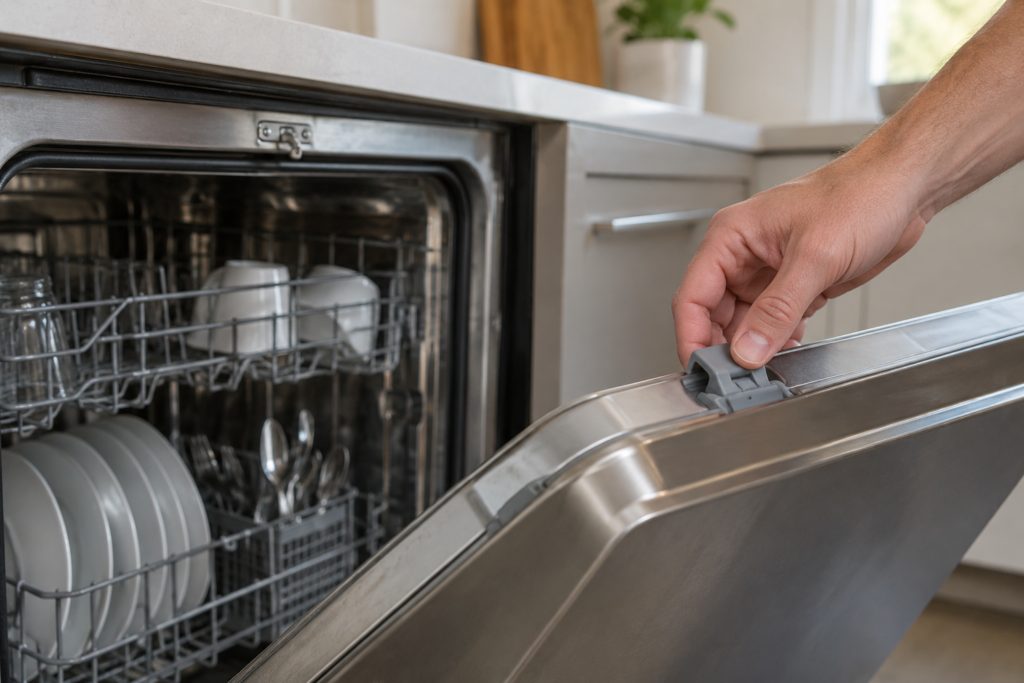
- Overloaded baskets. Tall glasses, bowl rims or pan handles press against the inside of the door and stop the latch reaching the strike with enough force.
- A worn or broken latch. The plastic hook or the strike has cracked or worn, so it cannot hold even when the door is pushed shut.
- A failed microswitch. The switch inside the door panel has failed open-circuit and cannot send the closed signal. This one needs a professional.
Why Does F8 Appear in the Middle of a Cycle?
Because the door has popped slightly open during the wash. The page says an item protruding against the door, or a latch spring that is weakening, can let the door move a little during vibration and trigger the fault. The cycle then stops suddenly with F8 on the display.
That symptom is a clue to the cause. A first-time mid-cycle F8 after a full load points at the baskets. A mid-cycle F8 that repeats with a light load points at the latch spring or the strike, and a door that swings back a little after you close it, with a soft or missing click, confirms the latch is worn or the strike has moved.
What Can You Check Before Paying for a Repair?
Three things, in the order the code page gives them, and none needs a panel off.
- Reload the baskets. Check that no utensil, bowl rim or pan handle sticks out past the basket edge, then close the door firmly with both hands until you hear a distinct click and press Start at once. Tall glasses and mixing bowls in the top basket are the usual culprits.
- Look at the latch strike. With the door open, check the strike on the front of the tub frame for cracks, chips or a turned position. If a screw holds it, make sure the screw is tight. On some Asko models the strike can be rotated gently to its best position.
- Reset and test. Switch the machine off at the power button, wait 10 seconds and switch it on. Close the door firmly and choose a program. If it starts without F8, the latch was the issue.
If F8 comes back on an empty machine, where nothing can obstruct the door, the page says the latch or the switch needs repair. A power cycle clears the display and nothing more.
What a Latch Repair Involves
A technician starts by finding out which of the three parts has failed, and the answer decides what is replaced. The checks are quick and the page puts the whole visit at 30 to 60 minutes.
- Test the microswitch. The technician checks it with a multimeter in the closed and latched position. An open circuit there means the switch has failed.
- Inspect the hook and the strike. A visibly cracked part that cannot be adjusted is replaced.
- Check the door alignment. A door that drops at one side points at hinge wear that needs adjusting.
- Test the closed signal. After the repair the machine should start without F8 on an empty cycle and with a full load.
Asking for the faulty part to be named in the written estimate protects you from paying for a switch when the hook was cracked, or the reverse.
When the Door Itself Is the Problem
A door that sags or does not stay shut by itself is a hinge fault, not only a latch fault. The page lists three reasons to call a technician: a microswitch that shows an open circuit when tested in the closed position, a latch hook or strike that is visibly cracked and cannot be adjusted, and a door that is visibly misaligned or dropping at one side, which suggests hinge wear that needs adjustment.
- Do not hold the door shut. A door that stays closed only while you press on it has a failed latch or hinge, and the page lists it as a reason to stop.
- Do not bypass the switch. The interlock exists so that the machine cannot spray water with the door open.
- Tell the technician the pattern. Whether F8 shows at the start or mid-cycle, and with a full or an empty machine, narrows the fault before anyone visits.
The final price is confirmed after the diagnosis on site, with a written estimate before any work begins. For the wider price picture, our Asko dishwasher repair cost guide lists the common repairs side by side, and the repair or replace guide covers the age question. Our dishwasher repair service covers the latch, the switch and the hinges. Schedule a visit or contact us with the code and the model number.