 Denys Mitchell
Key Takeaways
- F1 on an Asko range means the oven sensor fault has been detected, separate from the heating elements.
- A loose or corroded sensor connector is a common, inexpensive cause worth checking before a full sensor swap.
- Repairs start from $95 for a connector, from $150 for the sensor, and from $210 for a control-board fault.
- The range oven is a separate build from Asko wall ovens, even though the fault codes share a naming pattern.
- A diagnostic visit is the only reliable way to tell the three possible causes apart before ordering a part.
The Bottom Line
An F1 sensor fault on an Asko range is a low-cost, high-value repair in almost every case — check the connector before assuming the sensor itself has failed.
Repairing an Asko range oven sensor is worth pricing separately from a wall oven repair, because Asko sells a distinct freestanding range line with its own oven sensor and its own fault codes, and F1 on this appliance reports a sensor fault specific to the range's built-in oven compartment. Getting the right service booked for the right appliance keeps the diagnostic focused and avoids paying for a wall-oven visit when the fault sits in the range. Confirming the appliance type before booking also matters for parts: a wall oven sensor and a range oven sensor are not always interchangeable, even when the fault code reads identically on the display.
| Symptom | Likely part | Typical repair cost |
|---|---|---|
| F1 appears, oven will not hold temperature | Failed oven temperature sensor | from $150 |
| F1 appears intermittently during preheat | Loose or corroded sensor connector | from $95 |
| F1 appears with visible display fluctuation | Control board misreading a working sensor | from $210 |
| Oven overshoots temperature before F1 appears | Sensor drifting out of calibration | from $150 |
What the F1 Error Means on an Asko Range
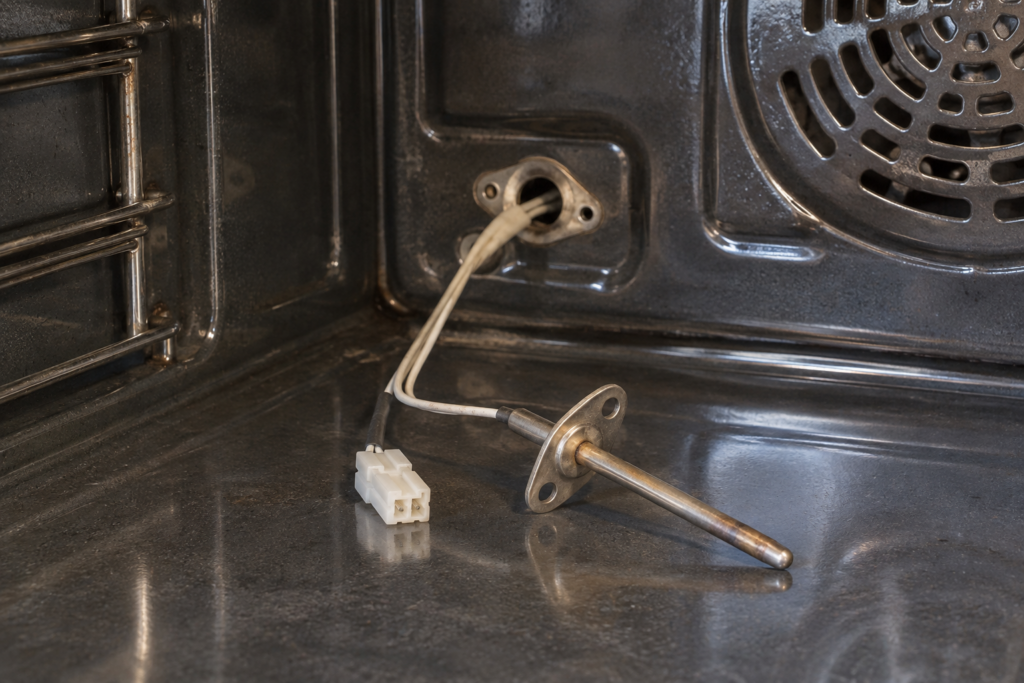
F1 on an Asko range means the oven sensor fault has been detected, and this site's F1 error page documents it as a serious oven failure specifically tied to the sensor rather than the heating elements themselves. The sensor's job is to tell the control board the actual cavity temperature, and once that reading becomes unreliable, the board can no longer manage the bake or roast cycle accurately, regardless of whether the elements themselves are still functioning normally.
Because the range's oven compartment is a separate build from Asko's wall ovens, a fault here does not necessarily mean the same part or the same fix applies if you also own a separate wall oven — the two appliances share a naming convention for their fault codes but not always the same components behind them. Mentioning the specific model, freestanding range versus wall oven, when booking a technician avoids any confusion at the parts-ordering stage.
Range ovens on this line also tend to see slightly more thermal cycling than a wall oven used less often, simply because a freestanding range often serves as the household's only oven and gets more daily use, which is worth factoring in if the sensor has already failed once before.
None of this means a second failure is inevitable — a replacement sensor and connector installed correctly should last as long as the original part did on a healthy oven — but it does mean a range showing this fault a second time within a year or two deserves a slightly closer look than the first occurrence did.
Keeping a simple note of the date and repair details each time a fault like this occurs makes that closer look far easier, whether you keep the note yourself or ask the servicing company to keep it on file for you.
It costs nothing and takes less time than the repair visit itself, yet it is the single most useful thing an owner can do to make any future service call faster and more accurate.
How Much Does Asko Range F1 Error Repair Cost?
An F1 sensor repair starts from $95 for a loose or corroded connector and starts from $150 for a full sensor replacement, with a control-board-level fault running from $210 when the sensor itself tests correctly but the board is misreading it. A diagnostic visit is the only reliable way to tell these three apart, since all three produce the same F1 code on the display.
The sensor itself is a small, inexpensive part, which is why the connector and wiring are worth checking before assuming a full sensor swap is needed — a surprising number of F1 faults trace back to a connector that simply worked loose during normal oven use over months of heating and cooling cycles.
- A sensor testing within range but the board still misreading it is the clearest sign of a control-board fault rather than a sensor fault.
- A connector showing visible corrosion or discolouration when the sensor is pulled for inspection confirms the cheaper repair path.
- A sensor reading wildly outside a plausible range, rather than just slightly off, usually means the sensor itself has failed rather than drifted.
What Should You Check Before Booking a Repair?
- Note whether F1 appears at a consistent oven temperature or randomly, which helps narrow down sensor drift versus a wiring fault.
- Check whether the oven overshoots before the code appears, a sign the sensor is reading low even though it has not failed outright.
- Avoid repeated power-cycling to clear the code, since it does not address whichever of the three causes is actually present.
- Write down how long the range has run since the fault first appeared, since intermittent faults are easier to diagnose with a timeline.
- Test the oven with a separate oven thermometer if you have one, which can confirm a temperature discrepancy independently of the built-in sensor.
Is Repairing the Sensor Worth It on This Range Line?
Yes, in nearly every case, since the sensor and its connector are inexpensive, standard parts and the fix does not require replacing the oven's heating elements, control board, or any structural part of the range. A control-board-level fault is a larger repair, but it is still generally worth doing compared with replacing a range that otherwise cooks fine on the cooktop side.
The only scenario where replacement enters the conversation at all is a range already showing separate, unrelated faults — a failing igniter, a warped cooktop surface — where the combined repair total starts to approach what a comparable new range would cost.
- Confirm with a diagnostic which of the three likely causes applies.
- Get a written estimate before agreeing to any specific part replacement.
- Ask whether the connector was tested, not just the sensor itself.
- Keep the receipt and part details in case a related fault appears later on the same oven.
Booking the Repair
Our range repair service covers the oven sensor, its wiring and the control board behind an F1 fault, and diagnosis on-site confirms which of the three is responsible before a part is ordered. Our guide to is it worth repairing an Asko oven covers the wider whole-appliance decision if the range is showing other faults beyond this one. Schedule a diagnostic visit or tell us how the oven has been behaving before F1 appeared so we can prepare the right part for the visit.
Most F1 visits are resolved in a single appointment, since the connector, sensor and board are all reachable through the rear panel of the oven cavity without needing to remove the range from its cabinet cut-out.