 Denys Mitchell
Key Takeaways
- E9 means the control board did not receive confirmation that the door lock engaged, so the machine will not start a cycle.
- The usual causes are a worn latch hook, a failed interlock and a wiring fault, in that order of how easy they are to check.
- Inspect the hook and strike, run a finger around the seal and power cycle for 60 seconds before calling.
- Never bypass the interlock or force the door: forcing it can crack the door glass.
- A machine that runs once and shows E9 again has an interlock failing intermittently and needs replacement.
The Bottom Line
Check the latch hook and the seal, power cycle once and listen for the lock to engage. If E9 persists, the interlock needs testing and replacing; the price is confirmed after diagnosis, with a written estimate before work begins.
An Asko washing machine door lock error means the machine tried to lock the door before starting, did not get a confirmation back, and refused to run. It is a safety interlock doing its job, not a stubborn latch, and the code behind it on this site is E9. Some of the causes are as simple as a sock caught in the seal. Others are an interlock that has worn out, and the two look the same from the front until you check a few things in the right order.
| What you see | Likely cause | What to do first |
|---|---|---|
| Press Start, E9 within seconds, no click | Interlock not engaging | Check the hook and seal, then power cycle |
| Door opens straight after pressing Start | The lock never engaged | Inspect the hook on the door |
| Runs once, E9 on the next load | Interlock failing intermittently | Book a technician |
| E9 with the door visibly shut | Electrical feedback fault | Do not force it; call |
| Seal torn or out of its channel | Damaged gasket | Stop and call |
What Does the E9 Door Lock Error Mean on an Asko Washer?
E9 means the control board never received confirmation that the door lock engaged. The code page explains that the machine attempts to engage the door interlock before every cycle, and without the confirmation signal it will not run. That is a deliberate safety design, and the page says plainly not to bypass it.
The page lists four symptoms, and you will recognize them:
- The machine refuses to start. Pressing Start makes it try to lock the door, and E9 shows within a few seconds.
- The click is missing. The normal solid click of the latch engaging is absent or only partial before the machine aborts.
- The door opens immediately. A properly locked door needs the lock to release; one that can be pulled open straight away never locked.
- E9 with the door looking shut. The door is latched, but the feedback circuit does not complete, which points at an electrical fault rather than a mechanical one.
The last of the four is the one to take seriously. A door that is physically closed and still reports a failed lock is telling you the problem is in the lock assembly or its wiring, and no amount of closing the door harder will change it.
What Causes an Asko Washer Door Lock Fault?
Three things, in this order of likelihood. The page lists a worn or broken door latch hook, a failed door interlock assembly and a wiring fault between the interlock and the control board.
- A worn or broken latch hook. The plastic hook on the door can wear down or snap, so the strike mechanism never presses far enough to trigger the lock sensor.
- A failed interlock. The electro-mechanical assembly has an internal actuator that can fail, so the lock neither engages nor releases.
- A wiring fault. A broken wire or corroded connector in the harness that carries the feedback signal causes a permanent E9 even though the interlock itself is sound.
The first is the one you can check from the outside, and the other two need a technician with a meter.
What Can You Check Yourself Before Calling?
Three checks, none of which needs a tool. Do them in order, and stop when the machine starts.
- Inspect the hook and the strike. Open the door fully and look at the plastic hook on the door and the strike on the machine body for cracks, chips and excessive wear. Close the door slowly and feel whether the hook snaps in firmly or slides in loosely.
- Run a finger around the seal. A sock, a small garment or detergent residue around the gasket can keep the door from closing flush, and the page says even a two or three millimeter gap from a folded seal lip can be enough to stop the interlock triggering.
- Power cycle and retest. Switch off at the mains for 60 seconds, make sure the drum is empty, close the door with a firm push of the flat of your hand and listen for the lock to engage before pressing Start.
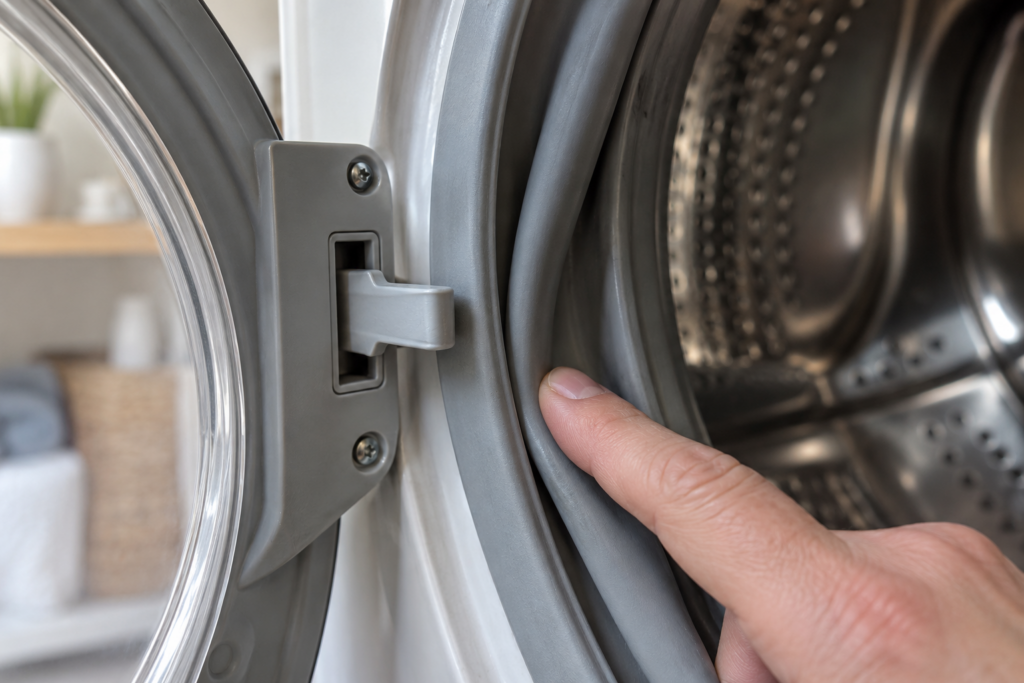
If the washer runs once and E9 returns on the next attempt, the page says the interlock is failing intermittently and will need replacing. That pattern, working once and failing later, is the most useful thing to tell the technician.
Is It Safe to Keep Using the Washer With E9?
No, and the machine will not let you. The code page says a wash cycle will not run with a door lock fault active, and that you should not try to bypass the interlock. A door lock is what keeps the door shut when the drum is full of water and spinning, so a machine that runs without it is a danger, not a convenience.
Two situations need extra care. If the door cannot be opened at all after an E9 fault, the page says not to force it, because that can crack the door glass. And if you notice the seal has torn or come out of its channel, stop using the machine and call; a damaged seal is a repair in itself, and it is one reason the lock may not engage.
How E9 Differs From Other Asko Washer Codes
People often search for the door lock and the water fill problem together, and on this site they are different codes. E9 is the door lock. The E2 page describes a water fill timeout, which can look like a door problem because the machine stops early, and the E4 page covers a drain failure. If your washer stops before the cycle begins, the code on the display decides which page to read.
- E9, door lock failure. The lock does not confirm before the cycle.
- E2, water fill timeout. The drum does not fill in the allowed time.
- E4, drain failure. The drain cycle times out, which can also keep a door locked until the water is gone.
When E9 Needs a Technician
When the hook and the seal are intact and E9 persists. The page says the interlock then needs electrical testing and replacement, and a harness with visible damage or corroded connector pins is the other reason to call. A typical E9 repair starts from $160 on this site, with the final price confirmed after diagnosis on site and a written estimate before any work begins.
Tell the technician three things when you book: whether the washer ever ran after E9 first appeared, whether you heard the latch click at any point, and whether the door hook looked intact. Those answers separate a hook that needs a part from an interlock that needs testing, and they let the visit end with the right part already in the van instead of a second appointment.
If the machine also will not spin, read our guide to an Asko washer that will not spin, and for the cost picture see Asko washer repair costs. Our washer repair service covers the interlock and the wiring; schedule a visit or contact us with the code and the model number.