 Denys Mitchell
Key Takeaways
- SPARK means arcing has been detected inside the cavity — this site pairs it with the most urgent instruction it gives.
- A damaged waveguide cover, a metal object, or a chipped cavity coating are the most common causes.
- Unplug the microwave immediately and do not attempt another cycle to see if the fault clears.
- A waveguide cover replacement starts from $45; a magnetron or high-voltage repair starts from $180.
- This is one of the few faults on this site that is never treated as a simple DIY fix.
The Bottom Line
SPARK is a genuine fire-safety alert — unplug the microwave immediately, do not test it again, and book a professional inspection.
Sparking inside a microwave is not a minor inconvenience to work around by running shorter cycles — the SPARK error exists because arcing inside the cavity can damage the appliance and, in the wrong circumstances, start a fire. This site documents the SPARK code with the most direct instruction it gives for any fault: avoid operating the appliance and contact a certified technician.
| Warning sign | What it usually means | Action |
|---|---|---|
| SPARK on the display, visible arcing | Metal object, damaged waveguide cover, or arc marks | Stop immediately, unplug the microwave |
| Popping or crackling sound during cooking | Early arcing before the code has triggered | Stop the cycle and inspect the cavity |
| Scorch marks on the waveguide cover | Repeated arcing has already occurred | Do not run the microwave until repaired |
| SPARK with an empty, undamaged cavity | Magnetron or high-voltage component fault | Professional inspection required |
What Does the SPARK Error Mean?
SPARK means the control system has detected arcing inside the cooking cavity, and this site's SPARK error page documents it as a severe sparking problem requiring the appliance to be stopped and an Asko-certified technician contacted. Arcing happens when microwave energy finds an unintended path to a conductive surface — a scratch or chip in the cavity's protective coating, a piece of metal in the cooking chamber, or a damaged waveguide cover that normally shields the point where energy enters the cavity.
- A metal utensil or foil left in the cavity by accident is the most easily fixed cause, once the unit is safely unplugged.
- A chipped or scratched interior coating exposes metal underneath that was never meant to be hit directly by microwave energy.
- A cracked or discoloured waveguide cover is one of the most common findings once a unit is opened for inspection.
Unlike most fault codes on this site, SPARK is not paired with a "simple DIY fix" message, because the underlying cause is either a physical hazard that needs removing immediately or a component fault that genuinely requires a technician's tools to diagnose safely.
Is Sparking Inside a Microwave Really a Fire Risk?
Sparking inside a microwave concentrates heat at a single point rather than distributing it across the cavity the way normal cooking does, and that concentrated heat can scorch the interior surface, damage the waveguide cover, and in sustained cases ignite paper towels, plastic wrap or other cooking materials left inside. A microwave that has been arcing for some time before the SPARK code triggers may already have compromised the waveguide cover's ability to shield the point where energy enters, which increases the risk on every subsequent use rather than resolving itself.
The waveguide cover specifically deserves attention: it is a small, replaceable part whose entire job is to protect that one vulnerable point in the cavity, and a scorched or cracked cover is one of the most common findings once a SPARK-flagged unit is opened up for inspection.
Because it sits directly in the path of the microwave's energy, the cover absorbs grease and food splatter over time as well, and a cover that has never been cleaned is more prone to arcing than one kept reasonably clear, even before any physical damage occurs.
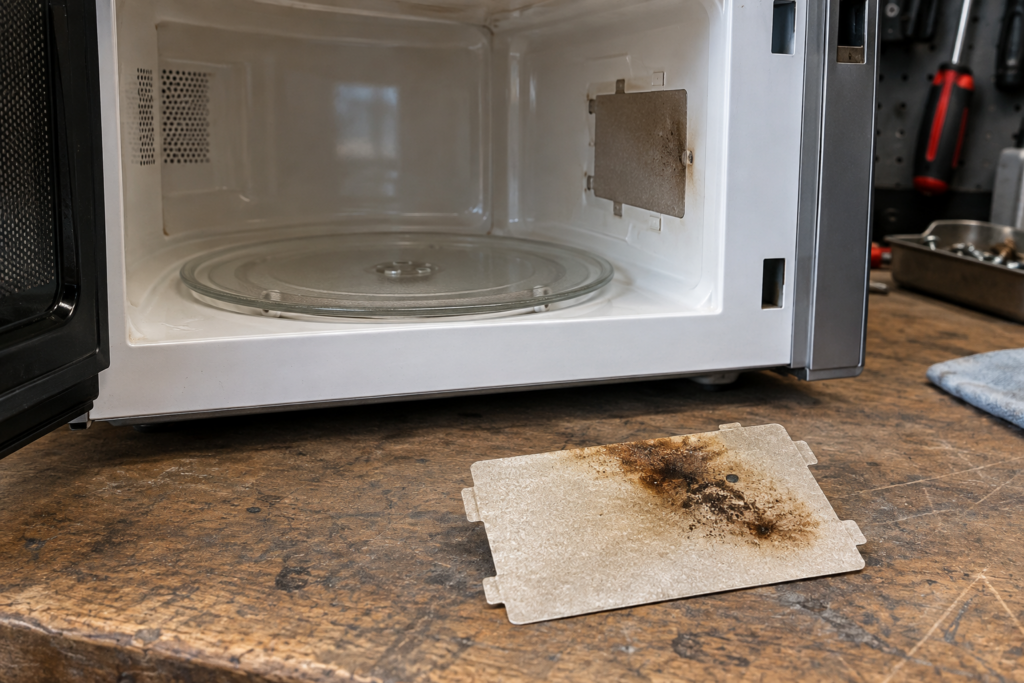
Asko Microwave Sparking Safety: What to Do the Moment SPARK Appears
- Unplug the microwave immediately rather than just closing the door or pressing stop.
- Do not open the door and inspect while it is still plugged in, even briefly.
- Check for an obvious metal object only after unplugging, and remove it if visible.
- Do not attempt to run the microwave again to see if the fault clears, even on a short test cycle.
- Keep children and pets away from the unplugged unit until it has been inspected, particularly if scorch marks are visible.
- Unplug the unit at the wall, not just via the control panel.
- Let it sit unplugged and undisturbed until a technician can inspect it.
- Note whether you can see scorch marks or a damaged waveguide cover.
- Book a diagnostic visit rather than attempting a repair without proper tools.
- Keep the unit unplugged at the wall, not just switched off, for the entire waiting period.
How Much Does a SPARK Repair Cost?
A waveguide cover replacement starts from $45, one of the least expensive repairs on this site, while a magnetron or high-voltage component repair starts from $180 when the arcing is not caused by the cover or by a foreign object. A diagnostic visit is essential here, both to confirm the cause safely and because opening a microwave's high-voltage components carries risks a technician is equipped to handle that a home repair is not.
Compare that cost against a replacement microwave before assuming either repair is not worth it: both figures sit well below buying a new unit, and neither repair touches the cavity door, turntable motor or exterior housing.
The turntable and door mechanism are worth mentioning specifically because owners sometimes assume a fault this alarming must involve replacing the whole unit's moving parts — it almost never does, since the cause sits specifically at the point where microwave energy enters and interacts with the cavity, not in the mechanical components that rotate the plate or seal the door.
Booking an Inspection
Our microwave repair service covers the waveguide cover, magnetron and high-voltage components behind a SPARK fault, and every visit starts with the appliance confirmed safely unplugged before any inspection begins. Schedule an inspection or tell us what you saw or heard when SPARK appeared so we can treat the visit with the urgency this fault deserves.
Once repaired, a preventive maintenance visit on the microwave every year or two, alongside a habit of wiping the cavity and waveguide cover clean after any spill, is a simple way to keep this specific fault from recurring.
Treat any future popping or crackling sound the same way you treated the first SPARK alert: stop, unplug, and have it looked at, rather than waiting to see whether the display confirms what your ears already told you.
A microwave is one of the few kitchen appliances most households use daily without a second thought, which is exactly why a fault this specific and this clearly flagged deserves to interrupt that routine rather than being worked around.
The short list of checks above takes only a few minutes and either resolves the fault immediately, in the case of a stray metal object, or confirms the need for a professional visit — either outcome is better than continuing to use a microwave that has already shown it can arc.
A few minutes of caution costs nothing next to the alternative, and it is the same logic that applies to any appliance fault paired with the word "immediately" on this site.